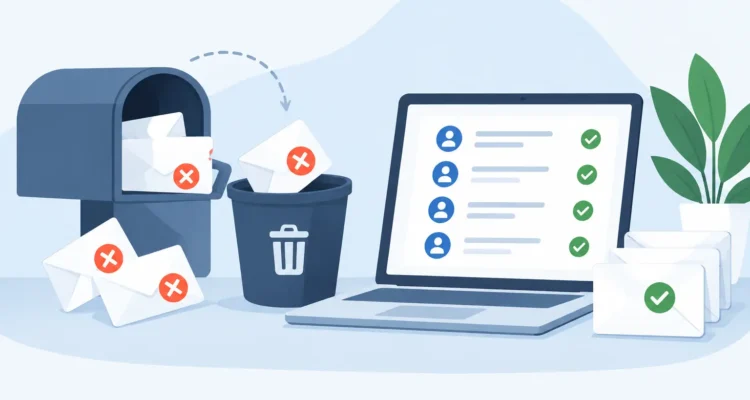
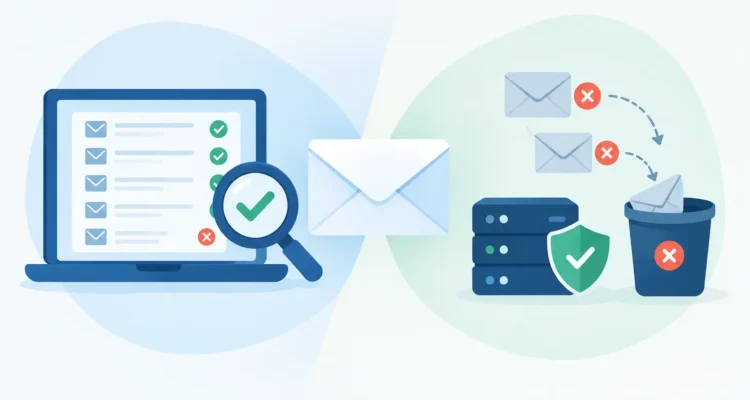
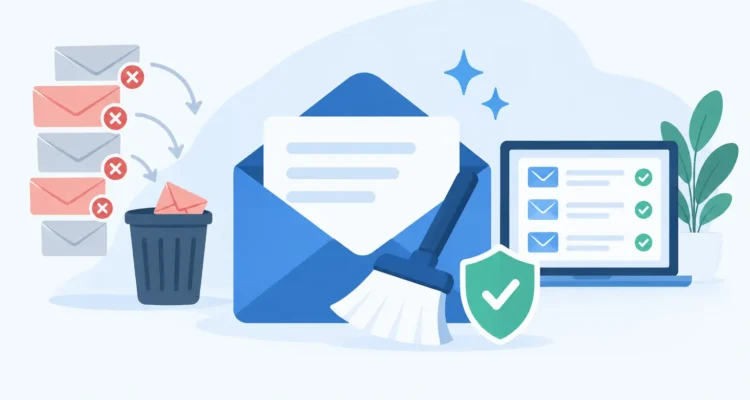
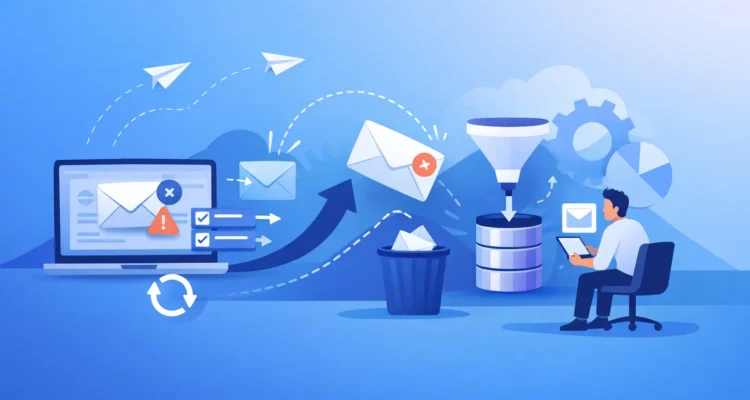
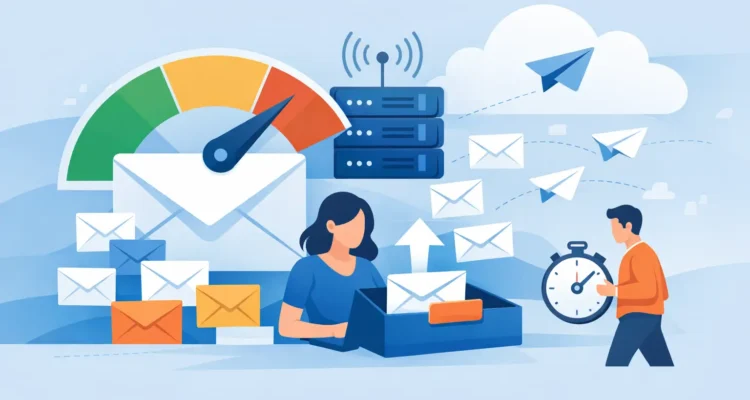
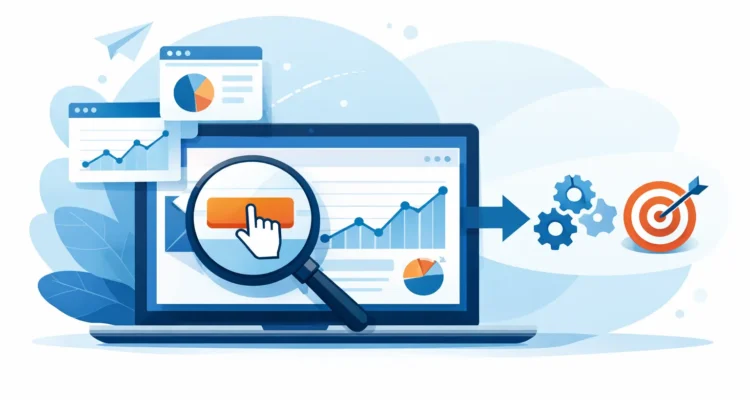
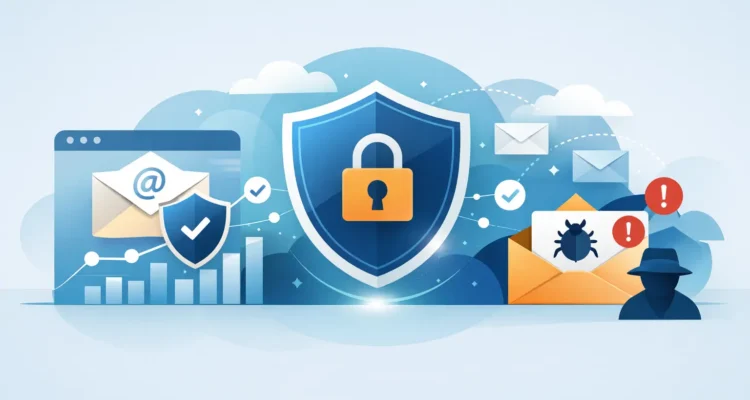
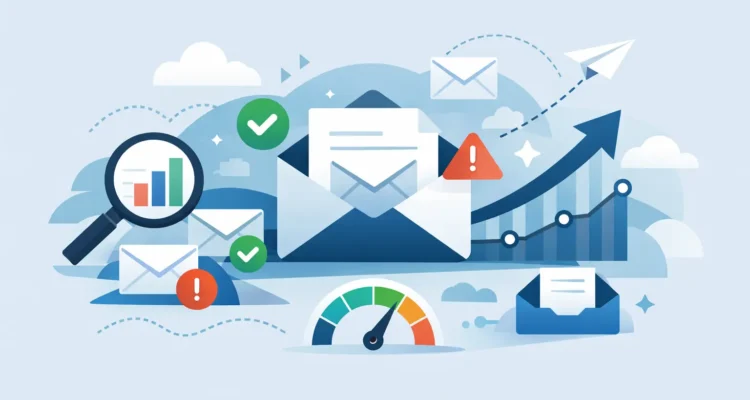
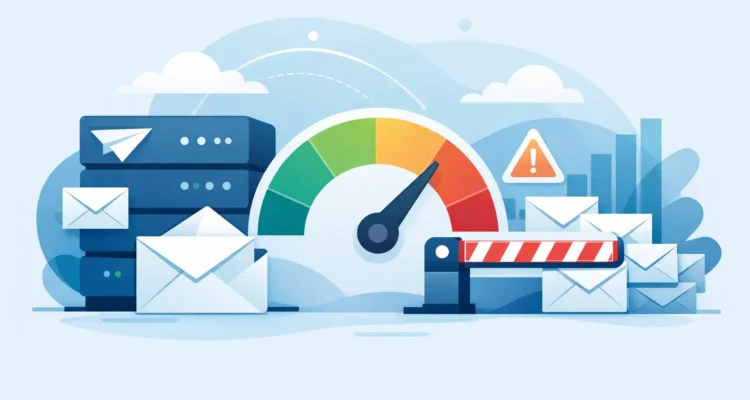
Email bounces waste sends and can hurt delivery. Learn what causes hard and soft bounces, how to read bounce data, and keep email lists clean and healthy.
Email Bounces: What They Mean and How to Reduce Them
Email bounces waste sends and can hurt delivery. Learn what causes hard and soft bounces, how to read bounce data, and keep email lists clean and healthy.
Email segmentation helps small teams send relevant campaigns, protect deliverability, and act on customer data without adding platform complexity or cost.
Compare the best desktop email marketing tools for list control, personalized sending, delivery pacing, and campaign tracking without platform complexity.
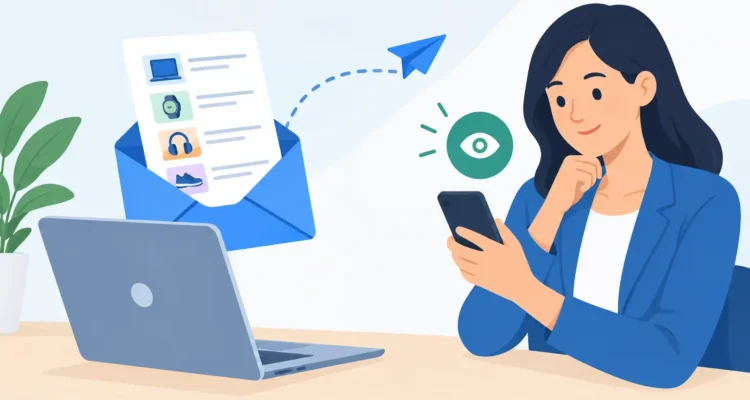
Learn how personalized email campaigns help small teams send relevant messages, protect deliverability, and measure results without unnecessary complexity.
Learn how staggered email sending software helps you control delivery speed, respect server limits, and manage large campaigns with less risk and effort.
Learn how to send customized email attachments at scale, personalize each file, protect recipient data, and test delivery before sending with confidence.
Choose HTML email template software to design, personalize, preview, and send polished campaigns while maintaining control of your contact lists directly.
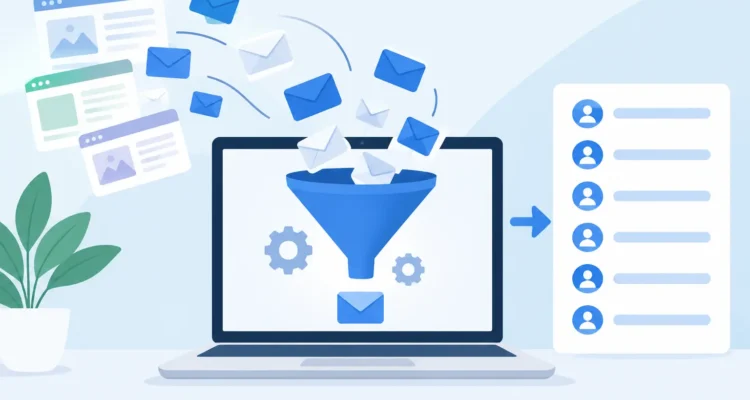
Learn how to extract email addresses from websites responsibly, verify contacts, manage consent, and build cleaner campaigns that people welcome daily.
Use an email verifier for marketing lists to reduce bounces, protect sender reputation, and focus campaigns on real, reachable contacts before sending.
Learn how to remove duplicate emails before sending, protect list quality, prevent repeat messages, and keep campaign reports accurate for better decisions.
Desktop email marketing software gives you practical control over lists, personalization, delivery pace, and campaign reporting without extra complexity.
Personal finance software helps you track spending, manage accounts, plan for bills, and make clearer money decisions without accounting expertise each month.
Email tracking software helps you measure opens and clicks, compare campaigns, improve follow-up timing, and make every email list work harder for you.
Email campaign scheduling helps you deliver relevant messages on time, pace high-volume sends, and stay in control of customer communication every workday.
Email list segmentation helps you send more relevant campaigns, protect deliverability, and turn contact data into timely customer communication at scale.
Mail merge lets you personalize bulk email from one template. Learn how to prepare contacts, test fields, and send accurate campaigns at scale with care.
Choose a bulk mailer that helps you clean lists, personalize campaigns, control sending speed, and track results without enterprise complexity or delay.
How to Personalize Bulk Emails When You Only Have Email Addresses Email personalization Mail merge Smart tags MaxBulk Mailer 8.9 Personalized emails usually feel more relevant than messages that appear to have been sent indiscriminately to thousands of people. But what happens when your mailing list contains little more than an email address? MaxBulk Mailer 8.9 can extract or estimate useful information directly from each recipient’s address, helping you create better greetings, subject lines, links, and conditional content without maintaining a complicated customer database. What can an email address tell you? An email address normally contains two main sections: [[email protected]](mailto:[email protected]) …
MaxBulk Mailer 8.9: QR Codes, Smarter Tags, AI Improvements, and More MaxBulk Mailer 8.9 is here, bringing new personalization tools, smarter email tags, improved AI message composing, QR code support, random content options, and several interface and compatibility improvements. This release focuses on helping you create more dynamic, personalized, and flexible email campaigns while keeping MaxBulk Mailer compatible with the latest system technologies. QR Codes Insert QR codes directly into your email messages using a dedicated tag. Smarter Tags Extract names, domains, providers, TLD information, company names, and more from email addresses. AI Improvements Use newer AI models and generate …
Why I am writing about email (and not personal finance) today In mid 2026, email deliverability is the small-business problem that keeps repeating – not because email is dead, but because inbox providers are stricter and more automated than ever. I keep seeing the same pattern: good businesses send decent content, but a quietly messy list drags everything down. This post is the routine we settled on after a couple of painful months: fewer bounces, fewer spam-folder surprises, and more stable results. The pain point: nothing is “wrong” – yet results keep sliding Open rates drift down, but content quality …
Why I am writing about email marketing today May 2026 reality: inbox placement is harder than it was even a year ago, and small businesses feel it first – especially when a list has been quietly rotting. The problem that forced me to get serious Symptoms: open rates drifting down, more “undeliverable” replies, and occasional “why did this go to spam?” messages from real customers. Root cause: the list had mixed sources (checkout opt-ins, event signups, old imports), and no one owned list hygiene. We just kept sending. Constraint: we are a small business. We did not want a complex …
Why I stopped blaming “email marketing” and started blaming my list I used to think email “didn’t work for our business.” What actually didn’t work was sending to a list that had quietly rotted for years. The real-world pain: you pay for email twice You pay once in money: sending costs, platform tiers, staff time, and design time. You pay again in deliverability: bad addresses and bounces train inboxes to distrust you. And you pay a third time in decision quality: if your list is messy, your metrics lie. What happened to us (and why it was predictable) We had …
Can colors influence your audience? – Unleash the power of colors and watch your audience be captivated! Imagine if something as simple as a color choice could affect how people feel, react, and engage with your brand or product. Well, believe it or not, it can! Welcome to the world of color psychology – where shades and hues hold the key to unlocking emotions and driving action. This blog post will explore the fascinating realm of colors and their impact on your audience. From understanding the psychology behind different colors to exploring how they can evoke specific emotions, we’ll uncover …
Why I chose email marketing over personal finance today It is April 2026, and inboxes are still the one place your customers actually check without an algorithm deciding who sees you. Small businesses are increasingly dependent on rented attention (social feeds, local search, marketplaces) that can change overnight. Email is not magic – but it is controllable. That makes it worth getting right. The problem I kept seeing: people blame content when the list is the issue Most “email isn’t working” situations I get pulled into are not about subject lines. They are about list hygiene, deliverability, and unrealistic sending …
Why I picked email marketing today (and not personal finance) March 2026 is another year where inbox providers are stricter, not looser. Deliverability problems show up faster, cost more, and are harder to diagnose after the fact. Small businesses keep telling the same story: sales are fine, the list is growing, but opens and replies quietly drift down until email feels “dead.” It usually is not dead – it is dirty data and reputation. Personal finance habits matter, but most owners can feel the benefit within weeks by fixing email hygiene. Cash flow improvements from finance changes tend to be …
The week our newsletter quietly stopped working Deliverability problems rarely announce themselves. They just turn your effort into a slow leak. What changed – and why it mattered Our list had aged. People change jobs, abandon addresses, or mistype forms. Old data is normal – ignoring it is the mistake. We treated bounces as “noise.” A few bounces feels harmless, until it becomes a pattern your sending reputation remembers. We mixed audiences. One-size newsletters are convenient, but they can spike “this is spam” complaints when the content is only relevant to part of the list. We chased open rates. In …
Why email marketing makes sense in February 2026 (if you keep it simple) Attention is still scarce: social reach is unpredictable and paid clicks are pricey. Email remains one of the few channels you can control end to end – but only if your list is deliverable. Spam filtering is stricter than ever: Gmail and others have raised the bar on authentication and list hygiene. A messy list now hurts faster and longer. Small businesses win by being consistent: you do not need fancy automations. You need a workflow you will actually run every month. The pain point: “We send …
Why I am writing about email marketing today February 2026 reality check: small businesses are seeing more deliverability issues than they did a few years ago, even when they are not doing anything shady. Mailbox providers are stricter about bounces, spam complaints, and engagement. Privacy features make open rates less trustworthy, so you need other signals. Purchased lists are still a fast path to trouble, and even “old customer lists” can rot quietly. The pain point: “We did one campaign and Gmail started throttling us” A small retail shop emails 8,000 “customers” collected over 10 years. They send a seasonal …
Why I finally stopped treating my email list like a junk drawer Lesson learned: Sending to more people is not the same as reaching more people. If your list quality slides, your deliverability slides with it. The pain point that forced the issue Open rates drifting down even though offers and subject lines were not worse More “undeliverable” replies and a slow drip of complaints A nagging sense that I was paying (and working) to email people who were never going to see it What was really happening (and why it matters) Deliverability is reputation. Mailbox providers watch how recipients …
Why email still matters in 2026 for small businesses Email remains a cost-effective, owned channel you control, unlike social or ads that can shift rules or pricing overnight. Privacy changes have made some vanity metrics less reliable, but email still drives predictable engagement when consent and relevance are front and center. With rising ad costs and algorithmic volatility, a healthy list is an insurance policy for launches, seasonal promotions, and service updates. In 2026, email is also your most dependable way to nurture first-party relationships, which supports long-term retention and referral growth. Compliance and deliverability essentials in 2026 Get clear …
Why email still matters for small businesses in 2026 Email remains a cost-effective, owned channel that does not depend on changing social algorithms or ad auctions. For many small teams, it is the most predictable way to reach customers. Inboxes are smarter, and filters are stricter, but permission-based email continues to deliver steady results when lists are clean and content is relevant. Privacy changes and economic pressure favor channels you control. Email lets you test, learn, and scale at your pace without large budgets. Successful programs balance consistency with restraint: send often enough to stay useful, not so often that …
Why email marketing still works in 2026 Email is one of the few channels you own. In early 2026, with ad costs fluctuating and algorithmic feeds changing, a healthy email list remains a reliable way to reach customers. It is cost-effective, measurable, and resilient to platform shifts. Two realities shape this year. First, privacy features continue to blur open-rate accuracy, so clicks, conversions, and list health matter more than raw opens. Second, major inbox providers tightened standards in 2024, emphasizing authentication, list quality, and clear unsubscribe. Small businesses that align with these basics tend to see steadier delivery and more …
Email marketing at the turn of 2026 – what matters now You do not need a giant budget to win with email, but you do need clean data, permission-based lists, and a reliable sending routine. As 2025 closes, focus on essentials that compound. Mailbox providers tightened standards in 2024 and kept them in place through 2025. Authentication, clear unsubscribes, and low complaint rates are now table stakes for visibility. Open rates are less reliable due to privacy features. Shift attention to clicks, conversions, replies, and unsubscribe behavior. Those signals reflect real engagement. If you send to fewer than 50,000 contacts, …
Why this week matters for your email strategy It is December 23, 2025, which means inboxes are intense and attention is scarce. Last-minute shoppers are looking for digital-first options, while many B2B readers are wrapping up budgets and planning for Q1. Shipping windows are tight or closed for many categories. Emphasize gift cards, digital downloads, subscriptions, curbside pickup, or local delivery where available. Keep messages concise and pragmatic. Readers will respond to clarity about availability, timing, and how to get help fast. If you email today, plan for a single high-utility send, not a series. A tasteful post-holiday or year-end …
Email marketing in December 2025: what is working for small teams Email still delivers when you respect the inbox. In 2025, small businesses win by sending fewer, better messages to people who asked to hear from them. Major mailbox providers continue to enforce authentication and easy unsubscribe for bulk senders that began tightening in 2024. If you follow best practices, you can reach customers reliably. This guide is a practical checklist for the end of 2025: how to grow a permissioned list, keep it clean, write messages people value, and measure results that matter. You will also find a simple …
Email marketing that fits December 2025 As the year closes, small businesses can use email for last-minute sales, gift cards, and early 2026 bookings without relying on paid ads. Email is a channel you control, and inbox standards in 2025 reward senders who respect recipients and keep lists healthy. Major inbox providers continue prioritizing authentication, consent, and low complaint rates. If you keep your list clean, your authentication correct, and your content relevant, you protect deliverability and revenue. Opens are less reliable because of mail client privacy features, so favor click, reply, and conversion metrics. Survey your list or invite …