
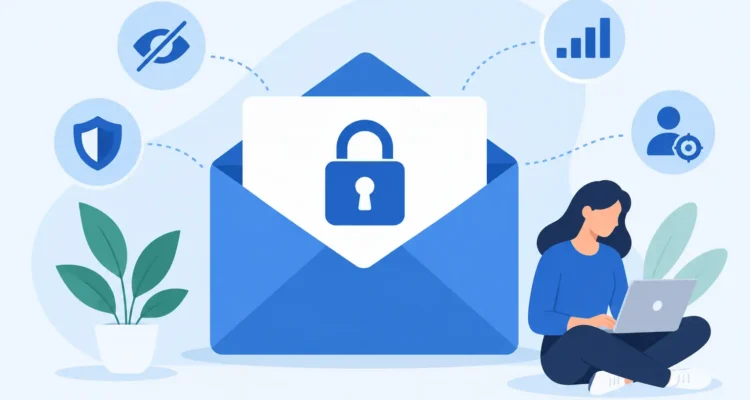
A campaign can still reach the inbox, earn clicks, and generate sales even when its open-rate report becomes less certain. That is the practical reality behind today’s email privacy trends. For small businesses and independent senders, the answer is not to collect more data or send more often. It is to manage contact data carefully, ask for clear permission, and measure results that reflect real customer action.
Privacy changes affect every stage of email work: how a contact joins a list, what details you store, how you personalize a message, and how you decide whether a campaign performed well. Senders who adjust their workflow can protect customer trust while keeping their email programs useful and measurable.
Why Email Privacy Trends Matter to Everyday Senders
Email privacy is often discussed as a compliance issue, but it is also a deliverability and customer-service issue. People are more aware of how their information is collected and used. Mailbox providers are responding with stronger filtering, privacy features, and stricter expectations for bulk senders.
At the same time, privacy tools can make older reporting habits less dependable. Some email clients load images through proxy services or preload them, which can record an open even when the recipient did not actively read the message. Other recipients block images entirely. An open rate is still a useful directional signal, but it should not be treated as a precise count of human readers.
This creates a simple shift in priorities. Instead of optimizing only for opens, focus on evidence of value: clicks, replies, registrations, purchases, downloads, appointments, and repeat engagement over time. These actions give a clearer picture of whether the message helped the recipient take the next step.
1. Clear Permission Is Becoming the Strongest Asset
A contact list is not just a collection of addresses. It is a record of why people expect to hear from you. That expectation is central to privacy, reputation, and long-term results.
Use signup forms that clearly explain what the subscriber will receive. If you plan to send product offers, newsletters, event notices, and press releases, say so plainly rather than hiding every purpose under a vague phrase such as “marketing updates.” A person who signs up for a monthly newsletter may not expect daily promotional messages.
Where appropriate, use a confirmation step after signup. Confirmed opt-in can reduce misspelled addresses, automated form submissions, and complaints. It may reduce the initial size of a list, but the remaining contacts are more likely to recognize your business and engage with your mail.
Permission also needs to be specific enough for your workflow. If a customer gives an address to receive an order receipt, that does not automatically mean they agreed to recurring promotional email. Transactional and marketing communications should be handled as distinct categories whenever possible.
2. Data Minimization Makes Lists Easier to Manage
One of the most useful privacy practices is also one of the simplest: do not collect data you do not need. Every extra field creates another detail to secure, update, explain, and potentially remove when a contact makes a request.
For many campaigns, an email address, name, language preference, customer type, and consent source are enough. A retailer may need product interests or purchase category data for relevant offers. A nonprofit may need donor status, region, or event history. The right fields depend on the campaign, but each field should have a clear purpose.
This approach improves everyday operations. Smaller, cleaner records are easier to import, segment, personalize, and review. They also lower the risk of using old or sensitive information in a message where it does not belong.
Keep a basic record of how and when each contact was added, along with the signup source and the communication category they selected. If someone asks why they received a message, you can answer quickly. If they unsubscribe, suppress the address reliably across future sends rather than merely deleting it from one campaign file.
3. Open Rates Need More Context
Privacy protections have changed the meaning of the tracking pixel, the tiny image often used to register an email open. This does not make campaign reporting useless. It means senders should read reports with more care.
A sudden jump in opens may reflect image preloading rather than increased readership. A low open rate can reflect blocked images, a text-focused audience, or a client that does not report opens consistently. Comparing open rates across different list segments, devices, or campaigns can be misleading when the audience uses different email software.
Use opens as one signal among several. Click-through rate, click-to-open rate, conversion activity, direct replies, unsubscribe rate, and spam complaints each reveal a different part of the customer response. For a price-list email, a click to the requested product page may matter most. For a press release, replies from journalists or downloads of media materials may be more meaningful. For a local service business, phone calls and booked consultations may be the real result.
You can also test content without relying entirely on opens. Send two subject lines to comparable segments, then compare downstream clicks or conversions. Test one change at a time, such as the call to action, offer, layout, or sending time. The results may take longer to interpret, but they are more closely connected to business outcomes.
4. Segmentation Must Be Useful, Not Intrusive
Personalization remains valuable, but privacy-aware personalization has limits. Using a recipient’s first name and sending offers related to a category they selected is usually easy to understand. Referencing highly specific behavior, location details, or inferred personal interests can feel uncomfortable even when the data was technically available.
A good test is whether the recipient would understand how you know the information. If the connection is obvious, the message is more likely to feel relevant. If it would require a long explanation, use a broader segment or leave that detail out.
Start with practical groups: new subscribers, current customers, former customers, event attendees, media contacts, and contacts who selected a specific topic. These segments support messages that are useful without turning every email into a detailed profile.
Frequency is part of privacy respect, too. A subscriber who stops clicking does not always need more reminders. A thoughtful re-engagement message can ask whether they still want the content and offer clear choices, such as fewer messages or a different topic. Contacts who remain inactive can be removed from active promotional sends after a reasonable period.
5. Deliverability and Privacy Now Work Together
Mailbox providers increasingly expect senders to identify themselves properly and give recipients an easy way to stop unwanted mail. Authentication records such as SPF, DKIM, and DMARC help receiving servers verify that a message is authorized to use your domain. They are technical settings, but their purpose is straightforward: reduce impersonation and help legitimate messages earn trust.
For recurring bulk email, make the sender identity clear, use a recognizable reply address, and include a visible unsubscribe option. Honor opt-out requests promptly. Avoid misleading subject lines, hidden tracking tactics, and sudden changes in sending volume that can alarm both recipients and receiving servers.
List hygiene supports this work. Remove duplicates, correct obvious formatting errors, identify invalid addresses before sending, and process bounced addresses after each campaign. Sending repeatedly to addresses that cannot receive mail wastes time and can damage your sender reputation.
Desktop tools can be especially helpful when you want direct control over these steps. For example, MaxBulk Mailer lets users manage lists, personalize campaigns, set sending thresholds, and review engagement without handing day-to-day campaign control to a complicated enterprise platform. The software is most effective when the list behind it is permission-based, current, and organized around a clear communication purpose.
Build a Privacy-Ready Email Workflow
A reliable workflow begins before the message is written. Import contacts from known sources, keep consent information with the list, and verify addresses before a major send. Create segments based on real customer needs, then compose a message that explains its value quickly and makes the next action easy.
Before sending, preview the message, check personalization fields, confirm the unsubscribe process works, and schedule delivery at a reasonable pace for your mail server. Afterward, review bounces, complaints, clicks, replies, and conversions. Use what you learn to improve the next campaign rather than treating each send as a one-time event.
Privacy expectations will continue to evolve, and exact requirements vary by location, industry, and audience. The most durable practice is uncomplicated: send useful mail to people who asked for it, keep only the data that serves that purpose, and make it easy for recipients to stay in control.